System Design and Development
This chapter focuses on what was designed for the project, starting with the requirements for the scope of design, the hardware and software used and the reasons. The system developed in this thesis was developed in 2018 (1st Iteration 2017) [181]. Compared to other systems; MINERVA has 6DoF (Unique) (standing/ dynamic), Asymmetric Mirroring Mode (Unique), Capable of suppressing of the nonparetic upper limb within the enriched virtual environment. The main technology used for the stable set-up was the HTC Vive, Controllers and two HTC Vive Trackers. Steam hardware statistics are included as they give a historical reference of current typical computer specifications. As the MINERVA is a prototype it discusses the main iterations of design including unused content. The research methodology used was exploratory as the solution developed is unique, a 6DOF system does not exist, and intents to provide further insight into how it works. Early development lead to the discovery of the asymmetric mirroring mode which can only be done in VRMT and not MT.
Requirements and Development Approach
Scope
A current problem in stroke rehabilitation is adherence to the rehabilitation program, a complex topic with many factors. On the premise that using technology, and rehabilitation exercises will be more attractive in their presentation, VRMT leads to greater adherence to the rehabilitation program. Feedback from clinicians assisted in the scope defining for what exercises are appropriate for patients and what issues they may face. Prototypes at different stages where presented the clinical staff to provide informal feedback on, which was used to drive design decisions. The goal of the system is to provide appropriate functional rehabilitation exercises. Beyond this, presenting the exercises more attractively should engage the patient more. Underpinning this approach is the encouragement to change habits, to promote a healthy lifestyle to assist the rehabilitation effort. The intended audience is stroke survivors with severe upper limb impairment as MT can work on patients without the ability to move the impaired limb. MINERVA may not be suitable for patients with eyesight problems as they may not be able to maximise the VR experience required. The type of skill acquisition to be gained from MINERVA would initially be a gross motor skill, though the design could change to include fine motor skills with suitable technology. MINERVA is a 6DOF system, and it would need an appropriate playing area. Home or Hubs (hospital, care homes) would be most suitable. The technology of MINERVA was designed for acceptable gaming computer specs (2017) by current standards, so if distributed, it could reach a mass audience without being extremely expensive to acquire the necessary hardware.
Initial design
Simply putting words together only makes them understandable, not real. Stating that the system is a Virtual Reality Mirror Therapy Game, does not mean that game is fun or that the therapy works. For the system to function, a complex balance of design factors must be achieved. The prototype is a proof of concept of the feasibility of the VRMT system from a technological perspective. The game element is supposed to be a concept to illustrate its potential. Initial thoughts regarding the assets available are for the patient to be a superhero-like avatar defending the city from an attacker. Ignoring the aesthetics, it is similar to the classic arcade game “Pong”. The focus of the movement is gross motor; the AI will aim at a predetermined location relative to the patient, this scripting was to keep its adaptable form when data values would be normalised by patient parameters. The game featured multiple levels of the same game but with different mirroring modes to demonstrate the difference (none, symmetric, asymmetric).
For the system to rehabilitate people, the correct exercise program needs to be selected, requiring help and collaboration from physiotherapists and the team involved. Software developers are qualified to consider what exercises could be done, but not qualified to prescribe it. Appropriate stroke rehabilitation experts would know which compromises to the execution of the exercises or programme are acceptable in effort to increase a different design goal such as adherence. The project did receive feedback from clinicians, an early version was demonstrated in front of hospital staff which included physiotherapists, occupational therapists, and other members, with the main criticism in the form of informal verbal feedback being a lack of a tutorial or explanation of how the mirroring works. This is understandable but is a reminder that it is a prototype. Very early on there was more happening in the game scene but it was suggested that it was removed as it could be distracting for the stroke patient. There were recommendations on how to build difficulty into the game, such as restricting gaming to one axis and increasing it to two as players advance. Types of exercises were suggested, which were noted for game design.
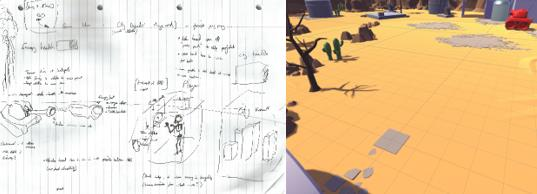
Beyond the initial prototype (Fig.) of the potential full system, sports and martial arts seem like a natural fit for the theme of the VRMT system. No formal guidance was provided for developer on what the game should be. The game loop developed for the prototype as proof of concept for exploratory research. Martial arts [186] teach students to persevere in difficult conditions to attain a goal. Martial arts was considered as it enables many game opportunities that could be modified into rehabilitation exercise but it would require much more development time to be implemented. Coaches, especially for children’s classes, modify exercises to make them more enjoyable yet retain functional transfer relevant to the sport.
Many physiotherapists are very passionate about helping others; they understand that comprising the exercise, but achieving adherence is better than the optimal exercise with no adherence. If they do not adhere, they are not progressing the rehabilitation. Telling physiotherapists, ‘make exercises more enjoyable, and you resolve adherence,’ does not answer the problem. It is like saying to win the 100m Olympic gold medal, you need to run faster than all the other athletes. Exercises are selected because they are functional to the rehabilitation. Qualified staff would know which exercise modifications are acceptable. Communication and collaboration are essential to establish what is suitable for the VRMT system, as there are so many sensitive design considerations.
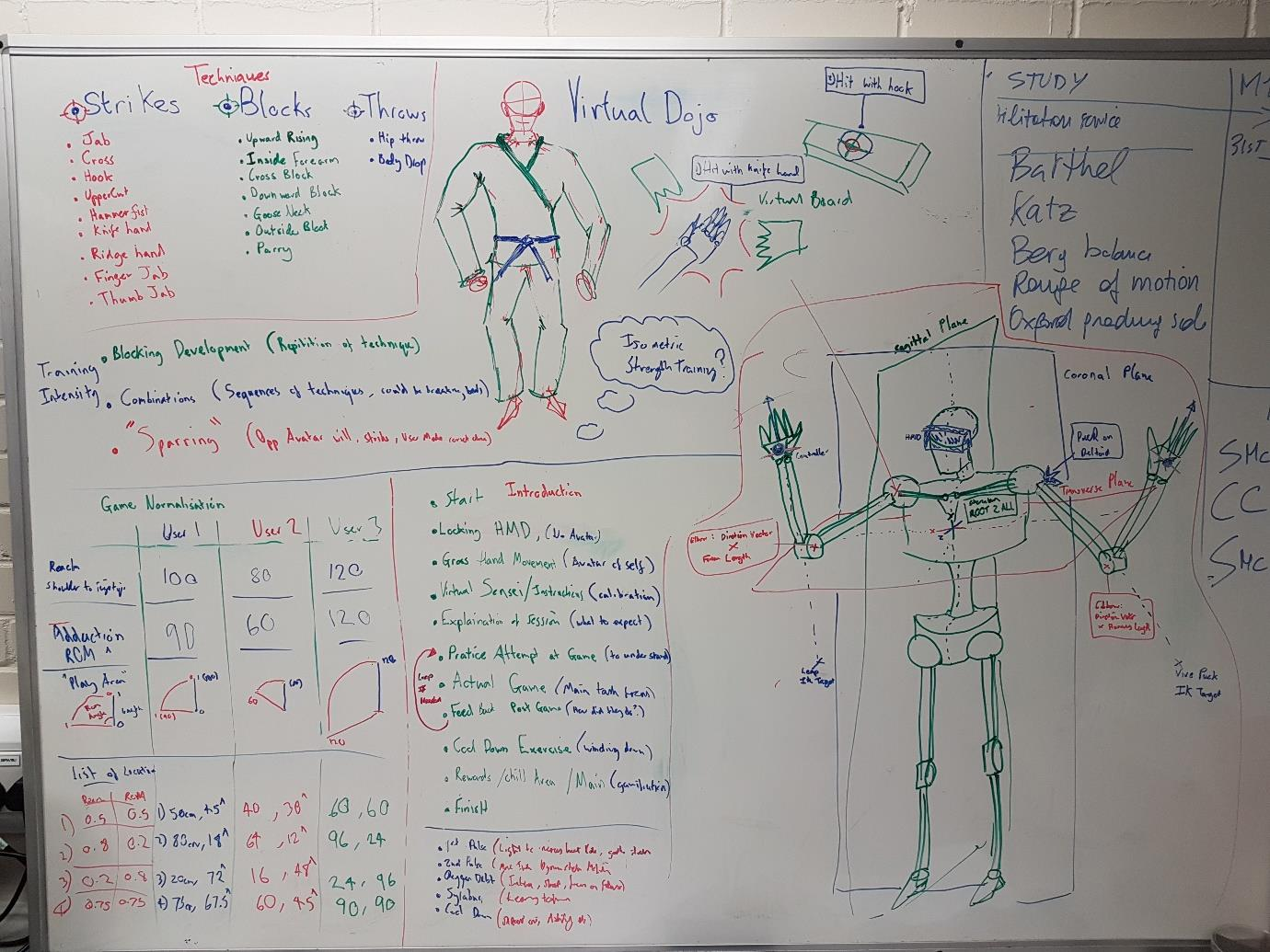
The author created a visual (Fig.) that was created to express ideas. The drawing of the simple skeleton was to visualise the rig set-up, placement of sensors, and IK targets. A Virtual Dojo was considered for the game’s design as it contains a wide range of techniques. The patient could do high repetitions of a technique before moving on to a game where they implement the skill they have been learning in a fun environment. Before any actual training, a suggested session schedule advised basic familiarisation with the mirroring and breathing exercises to assist the patient to relax to optimise time. “Boring” necessary aspects like high repetition would come first before meeting the “Fun” game. The logic behind this is the patient has something to look forward to, and the session can end positively. If necessary, a cool down before leaving MINERVA. Whether this is feasible would be guided by literature such as the mirror therapy protocol and advice from experts.
To give a fair distribution of difficulty, and to make data collection and analysis clearer, the system would map targets relative to the patient’s parameters. For example, if the difficulty was not mapped, a tall patient may do better. Since they do not need to exert as much movement to reach the extreme ranges in-game, they gain an advantage over players with a shorter reach who may not be able to reach it regardless of their ability. When patient parameters are known, i.e., reach and range of motion (RoM), the system can assign targets based on these values. Given a hypothetical example of two patients, patient1(Reach:100 RoM:90^) and patient2 (Reach:80, RoM:60) the system presents a target of Reach:0.5 and RoM:0.5, so the target would be different for each patient, patient1(Reach:50 RoM:45), patient2(Reach:40, RoM:30) but should require the same relative effort as the difficulty is mapped on their ability.
Software Tools and Hardware
Hardware
HMD was integral to the design of the 6 DoF system. The specific HMD itself for the 6 DoF to be used was not as important, as hardware is improving rapidly, and the system could adapt if it was a significant upgrade. Note the Oculus DK2 (2014) and the Oculus CV1 (2016) are only two years apart, yet the CV1 is significantly better. Unity3D software supports both the Oculus and HTC Vive.
HTC VIVE
The HTC Vive was selected as the HMD for use on MINERVA for two main reasons. The first reason is the HTC Vive, at the time of writing, was the current generation of VR HMD available. There are minor differences between the HTC Vive and Oculus Rift CV1. The second reason is for the consistency of technology used, as the Vive pucks were required for MINERVA’s stable 6DoF rig.
VIVE Pucks
To create a stable mirroring plane, additional sensors are required. Two additional sensors are the minimum for a stable set-up. The 2 additional trackers add stability to the tracking which was used for the main version of the system developed.
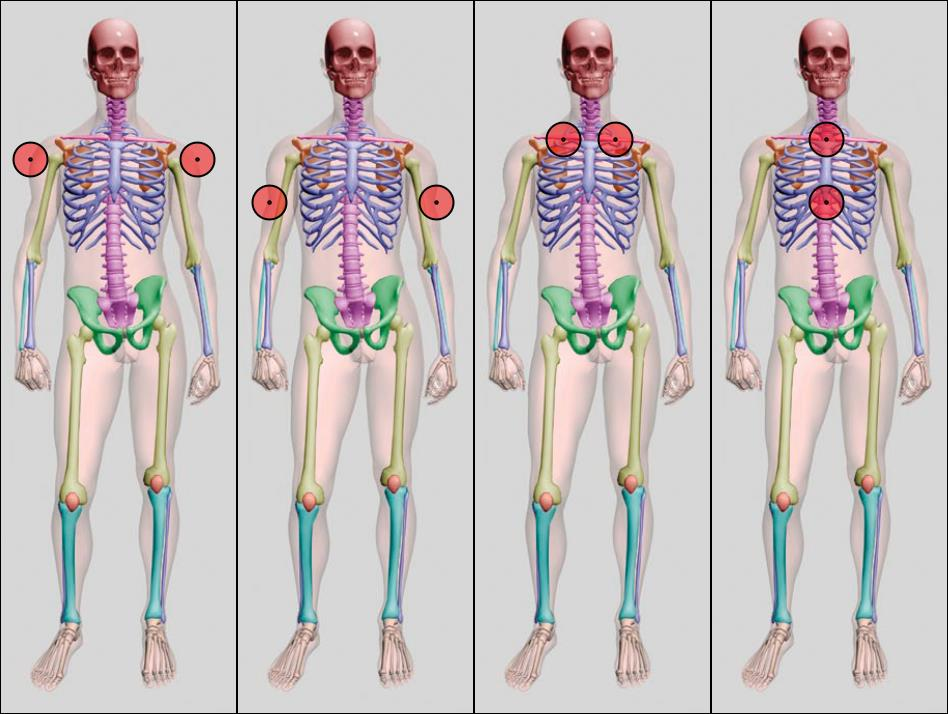
Low Deltoid, c) Lapels D) Tie. The mirroring plane can be worked out in all four configurations (Fig.). However, only the first two on the deltoids give additional information on the direction of the arm, which gives data to be used for the elbow inverse kinematic target location.
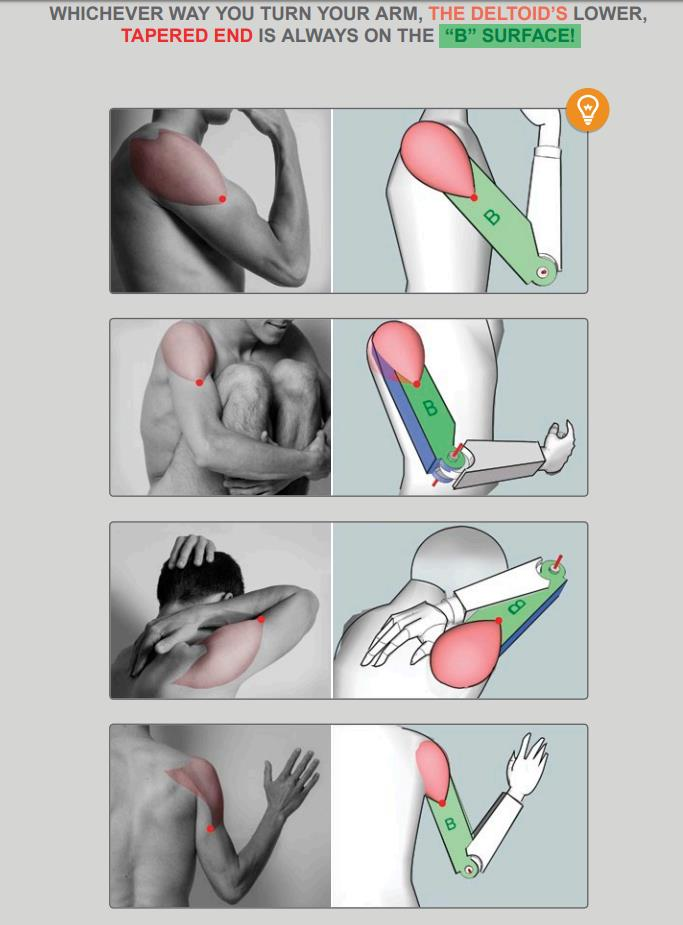
Location of the deltoid tracker (Fig.) [187]: the elbow direction may be determined by the tracker as long as it is parallel to the ‘B’ side of the humerus. Since the tracker is not on the joint itself, the offset needs to be calculated for improving the precision of the rig. Figure 20: Wearable technology design consideration for tracker placement.
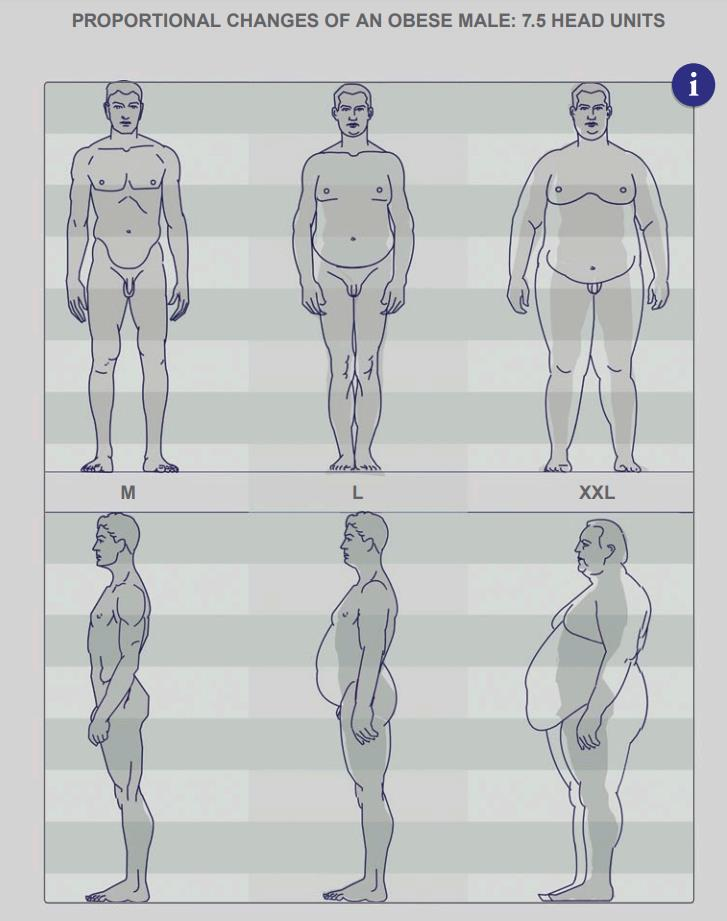
Because the trackers are wearable technology, weight is a design consideration when deciding where to place them on people with various body types (Fig.) [187]. Placing the trackers on the shoulders seems to have the least impact; as long as offsets are computed, accuracy will persist. Controllers VIVE
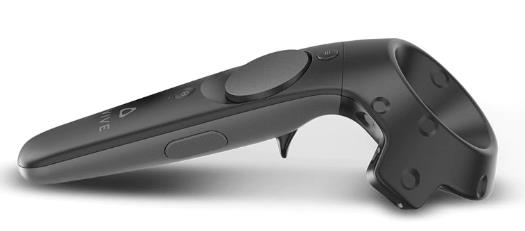
The majority of the work was done with the Vive controller (Fig.) [188] which was used from the start. The 6DoF is the most significant component. Base stations used to identify the play area are used to track the controllers. The controller can vibrate to offer tactile feedback, and input can be made by selecting buttons. The portable Vive controller proved dependable and steady during testing. A 3D model of the controller was used as it added both a real-world reference to the VE and was also congruent to tactile feedback of holding the controller and expectations of the position and rotation of the controller. However, if the hand modelled in the VE holding the controller is significantly different to how the patient is holding the controller this can lower presence. An attempt was made to make the avatar naturally hold the controllers and suggest patients mimic the grip in the game also.
Leap Controller
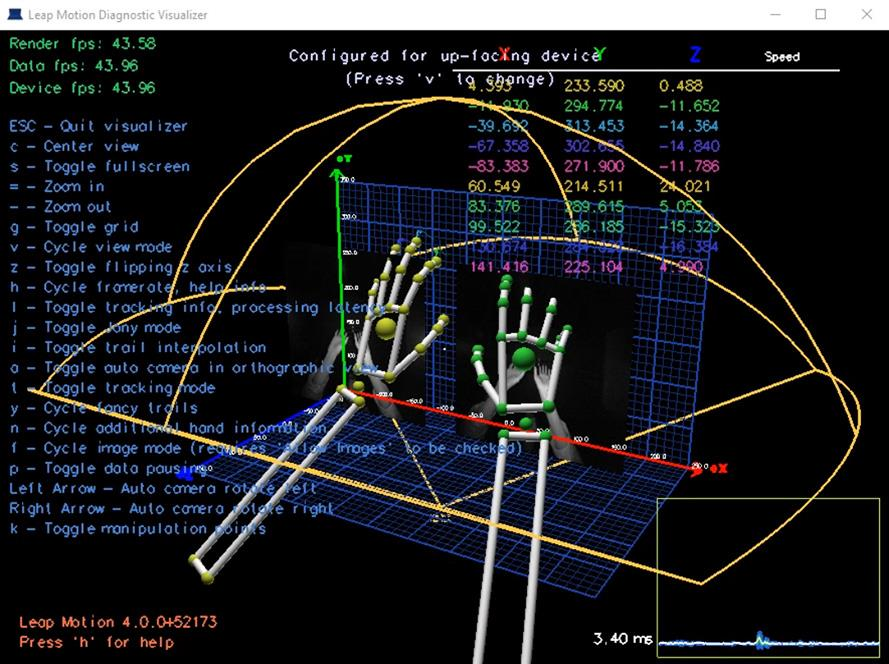
The Leap Motion controller works by tracking near-infrared within the interaction area. The patient uses a non-invasive interface meaning the patient does not hold a controller but does gestures within the interaction area. Note the yellow border region on the Leap Motion controller (Fig.) [189] in a virtual world that is for the range of motion. The rationale to use the Leap Controller was to heighten presence by seeing the movements of the hand. Although this is a benefit, there were many disadvantages which are now discussed.
Software
The software was developed to be able to run on common VR-capable computer specs. Steam hardware survey [127] is a good indicator as it has a large dataset of patients that use a computer for gaming. Unity was used in the creation of MINERVA. Since Unity is well-known and would reduce development time compared to learning a new engine like the Unreal Engine, it was initially chosen. Unity releases many versions of the software which can make implementation difficult as certain asset packages such as the Leap iteration would only work on older versions. In contrast, inverse kinematics assets would only work on later versions of Unity.
Blender which is 3D modelling software was used to create some specific 3D assets like an early version of low-poly hands and 3D text. Majority of the 3D assets were free from the unity store such as the environment. The selection of free assets available limits game design decisions but allowed for rapid development.
Tools for Metrics and Information Analysis
Statistical analysis is a key element of the project. One major problem is the lack of using common appropriate assessment tools. The Fugl-Meyer Assessment of Motor Recovery after Stroke (FMA) assesses Activities of Daily Living (ADL), Functional Mobility (FM) and pain and is a widely used quantitative measure for motor impairment. Results from an assessment like this are very useful for comparison with other studies.
Take, for example, a sporting event like sprinting. To claim to be the fastest runner, the person needs to prove it in similar conditions. Specialised/unique/local measures do have a function, like a system’s game score. However, they should not be the only measurement; their purpose is to give context to and identify a relationship such as: is there a relationship between the patients’ system game score and the assessment score?
Some results from studies are just misleading; motor learning principles explain many of these results[55]. Games often forget to mention learned behaviour whereby having more exposure to trials [190] to understand it better can improve the outcome of the trial being performed. This does not mean you are smarter, stronger, faster or better. Boasting about a high score means nothing out of context, if patients are hitting 100%, they have reached a ceiling, and it is not possible for them to improve within the scope of the trial.
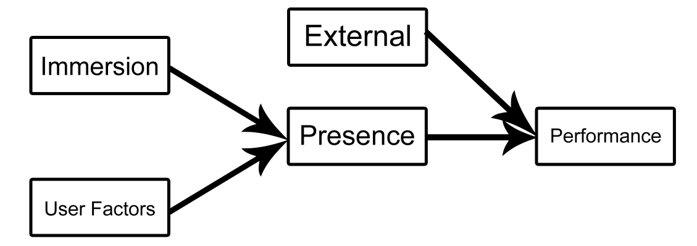
The purpose of the SEM (Fig.) is to address the research questions and the logical flow (Note directional arrows). The primary objective of the novel 6DoF system developed is to match its intended purpose. It must be able to rehabilitate patients successfully to earn the right to be called a rehabilitation system and achieved through system testing with a difference in performance scores from pre-and post-testing. The researcher needs to be transparent about the fitness of the model. As Marcus Aurelius [191] said “Just that you do the right thing. The rest does not matter.” If the model does not fit well, this means there could be more significant variables that are not accounted for and need to be identified or else there could be a finding that contradicts findings literature. The results will help sculpt future research as they identify the strength of relationships of the variables modelled using the VRMT system.
Overfitting a model is dishonest and should not occur. Values such as Chi-square, Degrees of Freedom (DF), Probability (P), Minimum Discrepancy, Goodness-of-Fit Index (GFI), Adjusted GFI (AGFI), Normative Fit Index (NFI), and Root Mean Square Error (RMSE) are provided to show the integrity of the model. In AMOS (software for SEM) the codes are: \cmin, \df, \p, \cmindf, \gfi, \agfi, \nfi, \rmsea.
The primary question that MINERVA was attempting to address was the relationship between presence perceived and performance. It is hypothesized that increasing presence would improve performance for VRMT as Mirror protocol suggests a vivid illusion [35] and training performance improved in a virtual simulator [117]. Experiments are required to provide evidence that this is true for VRMT stroke rehabilitation but using regression analysis does not tell the full story.
Performance is ultimately the focus of the project as there is no point in a rehabilitation system if it does not rehabilitate the patient. Depending on the exercise selected, multiple appropriate physio-approved testing measurements (Appendix H) would evaluate whether the patient has improved throughout the intervention. The research community can use this information to see how it compares to other interventions and be more useful for acceptance into systemic reviews. The usage of EEG is for reading the MEP signals and providing supporting evidence[192], and as a TMS elicited MEP is not a learnt behaviour, trial repetition will not affect it. Games scores are useful to see how the patient engages with the system and layered with the other measurements could offer insight into its impact. VR has a significant advantage in that it can be used to record lots of data. With plans to record the 3D transforms and timestamps of the patient’s body position, the data can be analysed from multiple perspectives for motor control and learning, depending on the goal.
External factors can influence the outcome. As stroke patients would likely receive support from the rehabilitation team, they may have an individual exercise program they do in addition to the study. It would be disrespectful and misleading to attribute success to the VRMT system if it were due to external factors like this. External factors can give context to a situation. For example, if a patient is on a trajectory to do well, but unexpectedly does not, why did it occur? It could be something relatively simple if a record identified it. Not having this data leads to speculation, not recording it means this detail does not get communicated to the reader.
Presence is psychological, so patient factors influence presence too. Presence itself can be hard to measure. The presence questionnaire is subjective, and it would be preferable to use multiple measures to give confidence to the measurements.
Immersion is a technological factor; it is the VRMT system. The immersive technology used and how it presents information to the patient influences the potential presence to be perceived. It is worth identifying the current state of the system. Simulation Sickness Questionnaire (SSQ) will measure the system’s impact on the patient. User Experience Questionnaire (UEQ) will measure the experience of the system. How attitude was going to be measure was not confirmed.
The user is such a significant factor concerning the system. Having a variety of users can help identify who is most suitable for this type of rehabilitation. There are two main categories of user factors: controllable and uncontrollable. As expressed in the literature review, lifestyle has an impact on performance. Something as simple as sleep is a major factor in the outcomes [37], [38], [193].
Design and Development iterations
To understand why MINERVA was developed in this way within this work we must first understand the questions asked and how they were answered. What is the goal of a mirror box? The goal of a traditional mirror box is to present an illusion that the impaired arm is doing the exercises. Why is the mirror in MT placed where it is? Humans have bilateral symmetry down the sagittal plane. Where would be the best place to place the origin for mirroring? Upper torso (sternum), so lumbar lateral flexion does not affect the mirroring of the arm.

MINERVA is not designed as other previously discussed VRMT systems in Chapter 4.3 (Fig.), as no other system uses 6DoF. With 6DoF and the mirror plane staying stable to the patient, MINERVA offers a more congruent representation of the avatar, which may allow for greater presence which is essential for the mirroring illusion to work. So fundamentally, the design could be considered more useful. Systems that do not use VR HMD are limited in the games they can do due to restrictions to a small game arena in a specific position. For example, in the VRMT mentioned (Chapter 4.3) with a screen, catching or throwing a ball is unnatural and does not align well with motor learning principles. These systems just appear to be attempting to make a digital copy of the traditional mirror box, which is not maximising the potential of the technology.
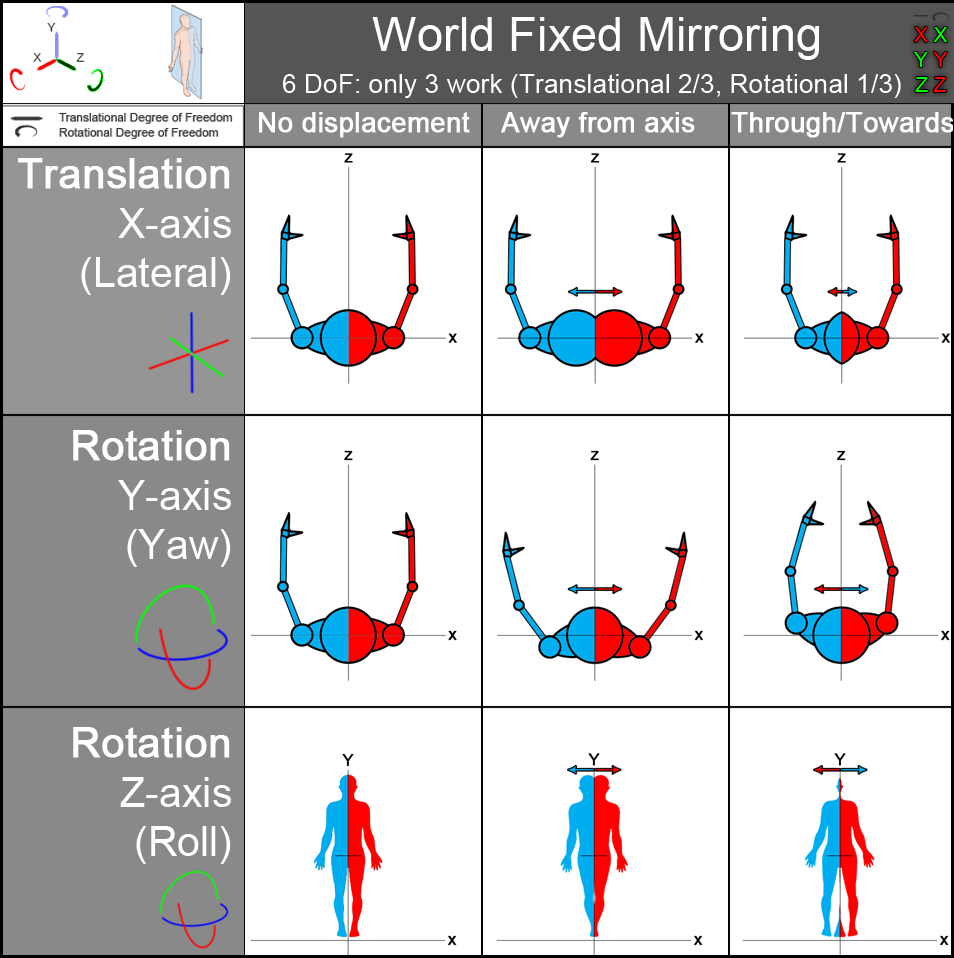
rotational). Other VRMT systems developed so far, are world-fixed like a cabinet (Fig.). The problem here is displacement off the sagittal plane. If the patient moves towards the mirror plane, their shoulder will shorten, and moving away would cause their shoulder to lengthen. This distortion is critical when it comes to the design decisions of congruence required for presence. Having a world-fixed system requires the patient to face forward; even rotation could cause distortions (although pitch only would be ok). The six DoF system developed for MINERVA uses a sagittal plane that originates from the patient, so the patient can move and rotate freely without any distortion.
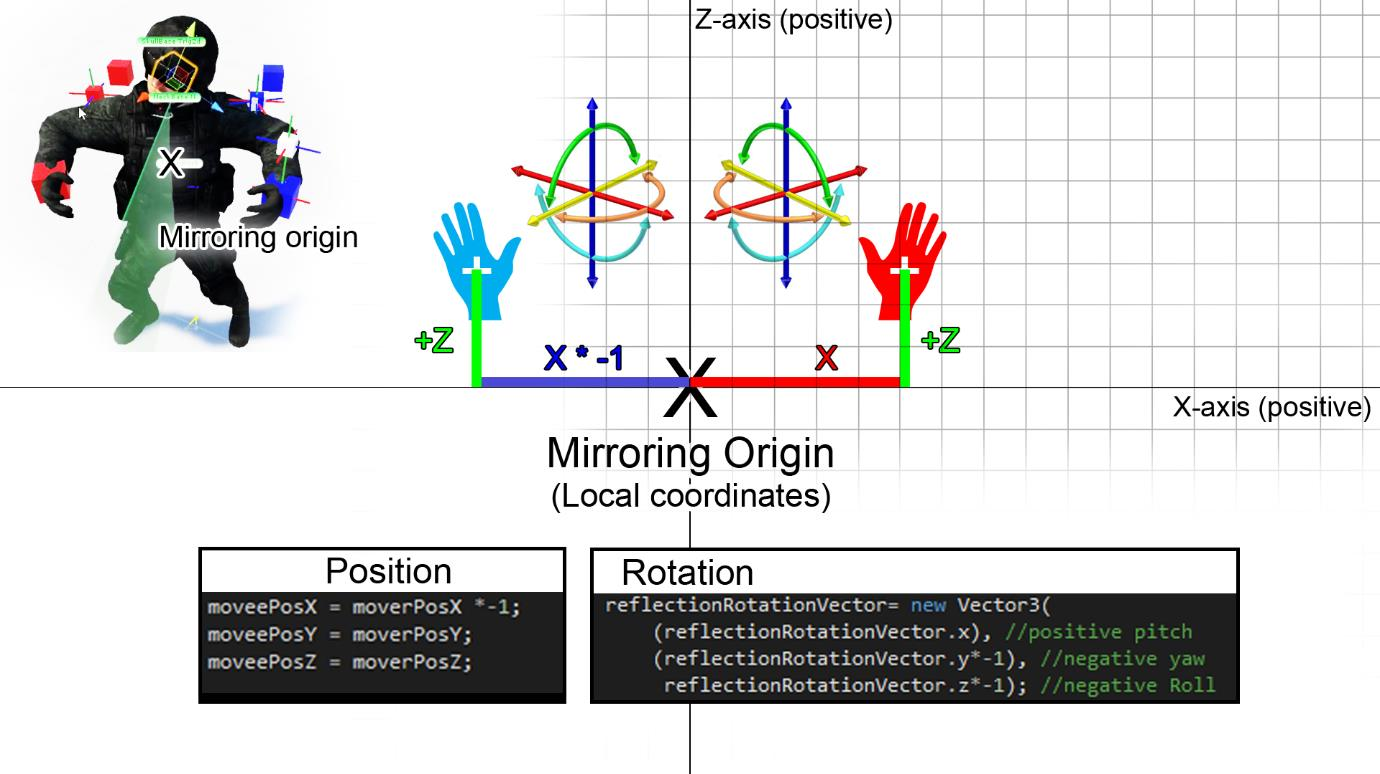
developed. MINERVA Mirroring system (Fig.) uses local coordinates calculated from the mirroring plane which ensures that the mirroring is always correct regardless of the orientation of the mirroring plane. If the mirroring plane is stable then everything works well, which is why additional trackers are used as they are reliable regardless of how the patient moves or rotates, guaranteeing a stable plane for the system to mirror.
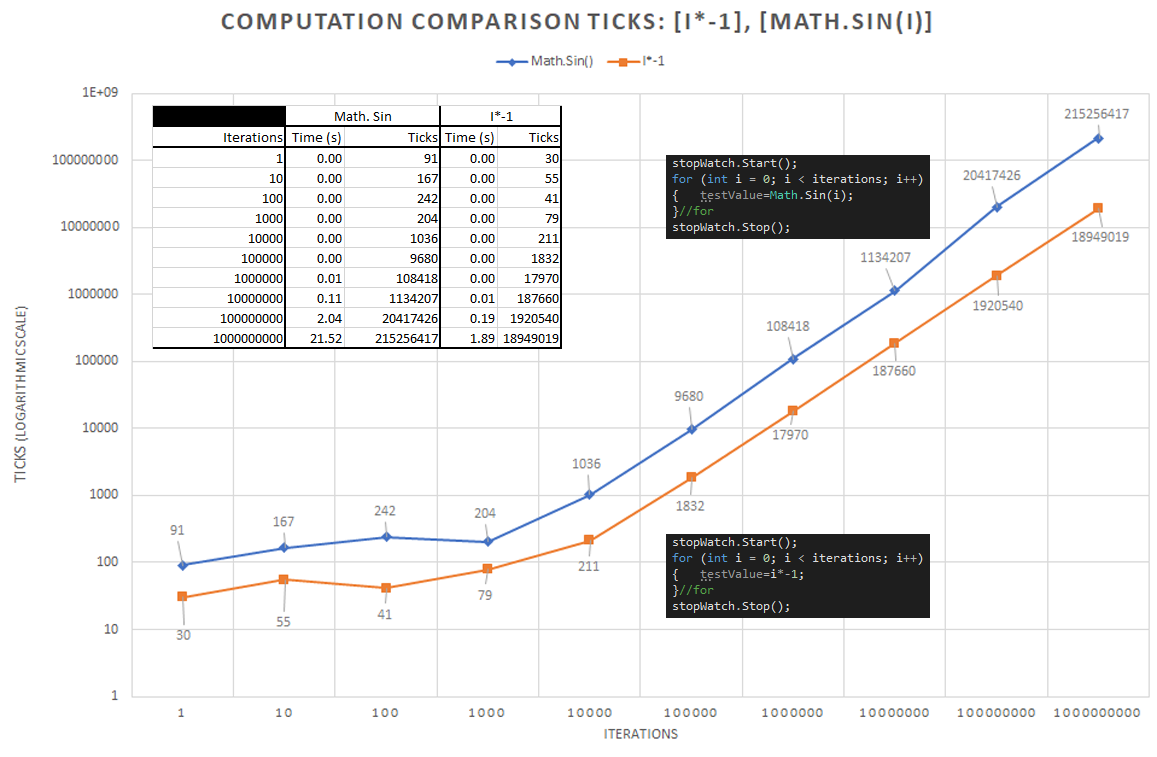
It is possible to calculate the position and location of objects in 3D space using trigonometry; however, this is more computationally intensive than swapping signs. Fig. illustrates how the usage of ‘Math.Sin(i)’ increases the computational time in comparison to multiplying by a negative value ‘i*-1’. The math function ranges from 2.5 – 11.3 times slower. The above example demonstrates a design chosen to reduce system latency. Refactoring the code to increase maintainability and extensibility would be worthwhile once the system’s external functions had been satisfactorily tested.
Technology
Stability is essential for the system, but why were two sensors chosen? This was a conscious design choice. For the number of sensors and stability, a Motion Capture (Mocap) suit would be best as every point is known, so nothing needs to be estimated. However, it is impractical to expect an impaired patient to do this, as they would struggle, which is a conflicting design goal where inhibitors to exercise are to be reduced. There are no extra sensors (tracked controllers plus HMD). The HMD position and input from one controller are used to estimate the positions of additional joints in this experimental version, which is the most unstable and incorrect. This created problems for the stability of the display of the inverse kinematics of the avatar. One additional sensor placed inline on the sagittal plane works fine in theory. However, practically it is prone to misalignment due to patients’ physical stature and clothes worn to add to the potential problem. To use one sensor, it must be secured well. With two additional sensors, this was the most stable version of the VRMT system developed. For the position of the sagittal plane, the position of the sensors was bisected. The rotation data of the sensor is not required calculation only positional, this adds stability as patient movement has minimal impact if the sensor’s placement lies at appropriate locations. The optimal position of the 2 addition trackers is on each deltoid. For the number of sensors and inverse kinematics, as stated, Mocap suits have many points, so the position and rotation of a joint can be known with little error in estimation. Two more sensors are used; one is attached to the deltoid and used to determine the position of the shoulder. This is significant since a known location does not require input from the tracking controllers. In this way it allows the hands to move freely without any detrimental impacts. Using two additional sensors was a conscious design decision as it attempts to balance the issue of having too many sensors which is considered invasive and could make set up for the patient difficult and having too few sensors which would affect tracking stability which would be more likely to break potential presence. With 0 additional sensors (tracked controllers + HMD), the only data input is from the tracked controller in the non-impaired arm and HMD. Many attempts were made during development to reduce instability, such as only rotating the patient by calculating the elbow position, similar to guiding a blind person when walking with them. Wrist rotations cause distortion, as the only shortcut to estimate the elbow is to assume the hand is in a fixed position like a boxer wearing wraps. One additional sensor means the sagittal plane is known, so the mirroring plane itself is fine but suffers the same problems as having 0 additional sensors in the calculation of the elbow position for the system.
Reflection
The rationale for trying to build a system with minimal additional sensors is to reduce the amount of complexity required to set up the system. A long setup time could deter a potential patient from engaging with the system. It is possible to construct a mirroring system with just the tracked hand and head input. However, it is too unstable, especially considering how presence is one of the most important design decisions for VRMT; instability might potentially disrupt the congruence required for a believable illusion, this is supported by previous research the “MT: Practical protocol for stroke rehabilitation” by Genius et al. which states “The mirror image has to match with the perception of the affected limb in order to facilitate an intense mirror illusion.”[35].
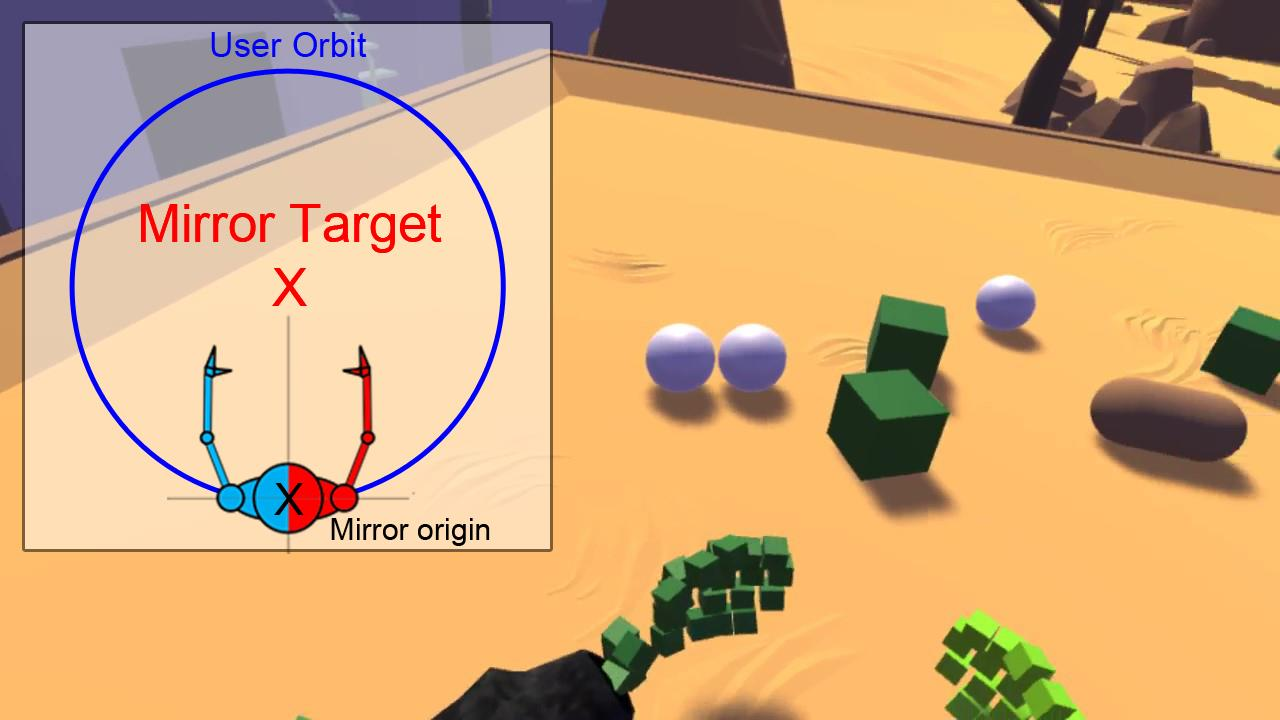
Adapting a world-fixed mirror plane concept: One early idea as to include a play table with the mirroring plane always directed toward a point, i.e., the centre of the table (Fig.), which opens game opportunities as the patient can rotate around the play arena if they intend to, the patient still has locus of control, and fundamentally it still has issues with a mirroring that is fixed to the world. To allow the patient to walk about securely, the play area must be a smaller specified VR area. By providing a virtual table for interaction, there is a chance that the patient will try to lean on it and fall which is a safety concern. A circular play area would be desirable, as the patient can rotate around the origin, where, hopefully, the mirroring plane remains congruent to the patient. In a rectangular play area, it is harder to determine this, as the patient would rotate their body at certain points, especially at corners. An advantage of MINERVA in comparison to a world-fixed mirroring solution is that independent head movement does not influence the mirror plane. This means MINERVA is less likely to break the mirroring illusion required for presence.
5.5.1 Modes
VR is not just about replicating reality - if it were, would there be much point in selecting a VRMT system instead of traditional MT? If deciding to use technology, the advantages should be exploited. One significant advantage of VRMT over MT is the fact the laws of reality do not apply in the VE. Due to the way lights and reflections work, it is not possible to create an asymmetric mirroring mode using a traditional mirror box.
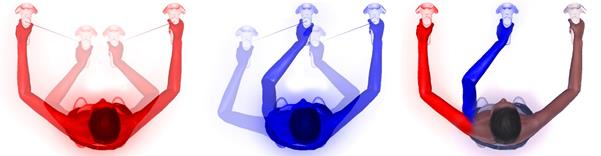
the different modes. The potential mirror treatment movement shown in Fig. (asymmetric) and developed modes is not physically possible with a mirror box which is a unique contribution by the MINERVA prototype. The book by Schmidt et al. [55] shows the advantages and disadvantages of various modes. Certain modes are simpler than others depending on the objective of the assignmentFig..
Versions Created
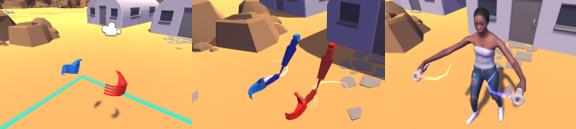
Iterations of the prototype had an emphasis on increasing presence. (Fig.) These versions all used the same hardware, but it can be seen how the fidelity of the avatar representation has improved.
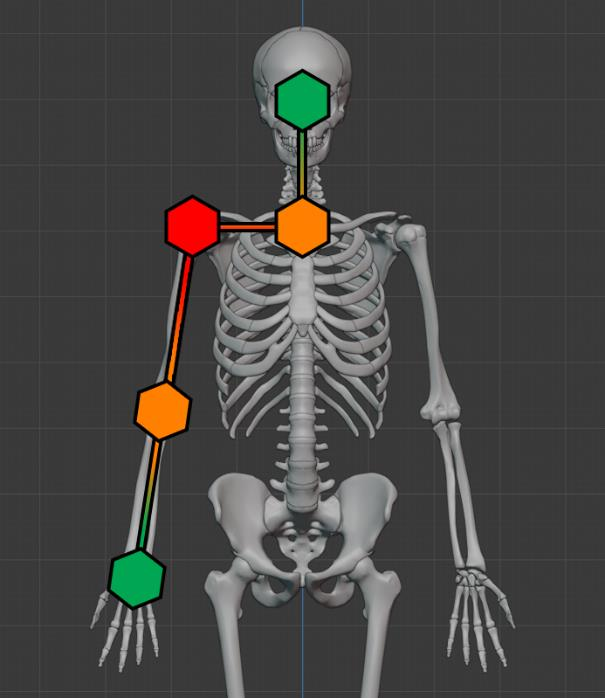
During system development there were multiple variants of the system which included a system that had No trackers (Vive Pucks) and Vive controllers for hand input device; this variant was not stable and used trigonometry to stabilise the shoulder for the inverse kinematics. Although it did work it did have issues which are now detailed (Fig.). The input positions are fine (green) as the location of an input device is near, and it is possible to do a rough estimate of the neck base from the VR HMD, whereas the elbow position is calculated from the controller input (Orange). As bones are fixed in length, if the neck base and elbow position is accurate then the shoulder position can be calculated using trigonometry from where they intersect. Because of how the rigging was set up, head rotation had no influence on it (which was an issue with other potential designs). The problems occur if the patient is not standing straight; as the patient leans and the angle increases, the accuracy of the neck base increases because the position is displaced vertically. An issue calculating the elbow position from the controllers is the orientation of the hand, where rotating the hand can cause the virtual elbow to move. If the patient had their hand strapped up like a boxer which limited wrist movement this would not be an issue. For the shoulder joint itself, limiting the clavicle to a plane reduces the location from a sphere to a circle, and then the intersection mathematics is calculated from the elbow and neck base position to allow the shoulders to rotate correctly with the patient. It is possible to use only the VR HMD and input controller for IK, however, it is not stable enough.
Proposed Sessions flow
The lack of feedback on the suggested session flow delayed development, especially in areas which ultimately resulted in their removal from the final version. There are many design goals with some in conflict; therefore, it is difficult to get the balance right. Example potential session flow:
- Warm-up (including getting familiar with the Mirroring illusion)
- Breathing exercises
- Skill-based practice (repetitions) or components
- The ‘game’
- Strength training (Isometrics)
- Cool-down
One of the measurement tools proposed for the system is the use of TMS. TMS readings can get better signal reading depending on the muscles used and the exercise performed. An understanding of this is important as when looking at the physio exercises available, they can be read well by TMS. An additional layer is, can this exercise by enhanced using VR? If VR cannot enhance the exercises, is it worth using the technology? Essentially, the design is a careful balance of optimising a physio-viable exercise, enhanced through VR, and shows a good reading on TMS.
Rigging Avatar
Most of the complexity of MINERVA is in the rigging of the avatar. Understanding the anatomical mechanism is essential[195]. To represent it as a rig for the system to use; first, we need to observe how the human body moves in reality. The skeleton gives the body structure and depending on how the bone is attached, it will rotate in a specific way. Specific muscles move these bones and not all patients have the same mobility for joint range of motion, so the system needs to be aware of this for assigning difficulty.
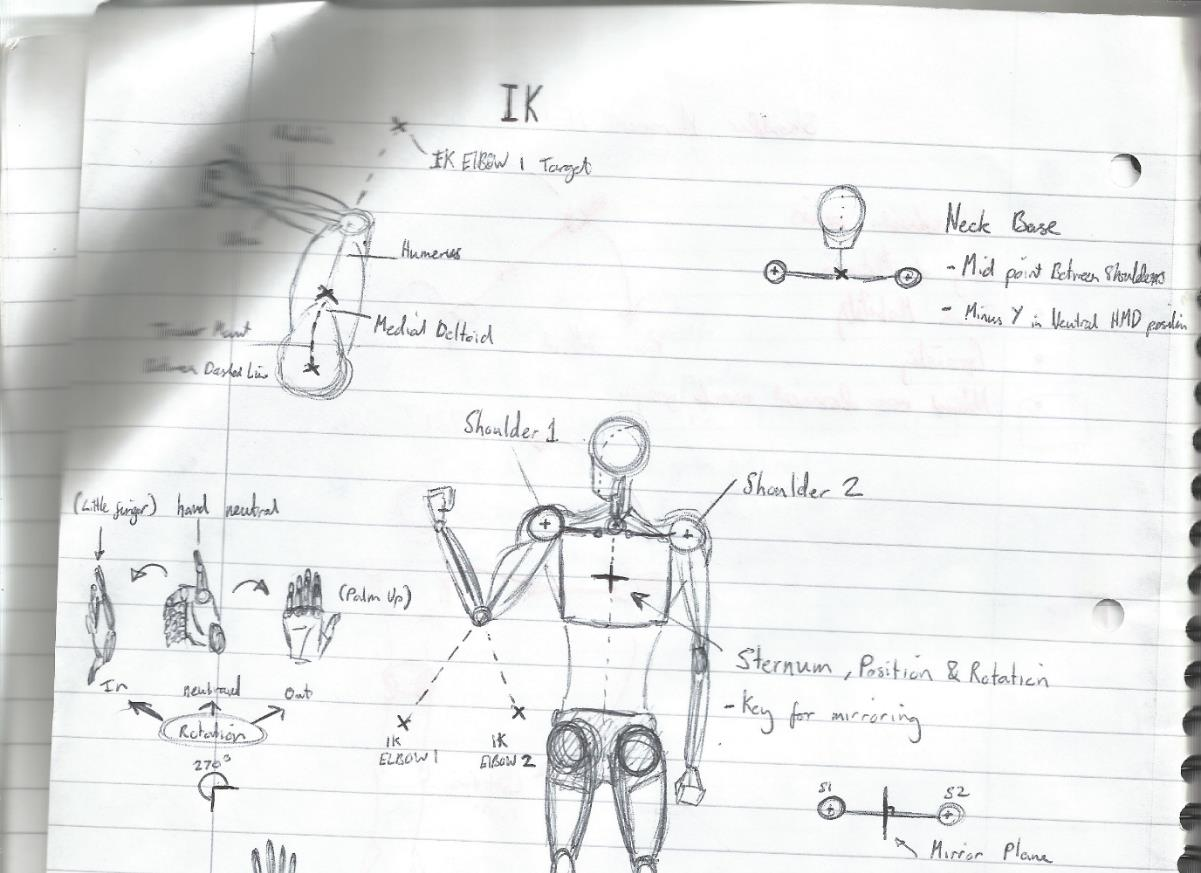
An early sketch of development for Inverse Kinematics (Fig.) shows that the elbow can be determined two ways, either from the controller being the hand and the direction of the forearm, but if the patient bends their wrist, this can cause inaccurate representation as the wrist is not fixed. A better way to determine elbow IK is to have the additional tracker orientated from shoulder down the humerus; this allows the hand controller to move independently without effect the IK representation.
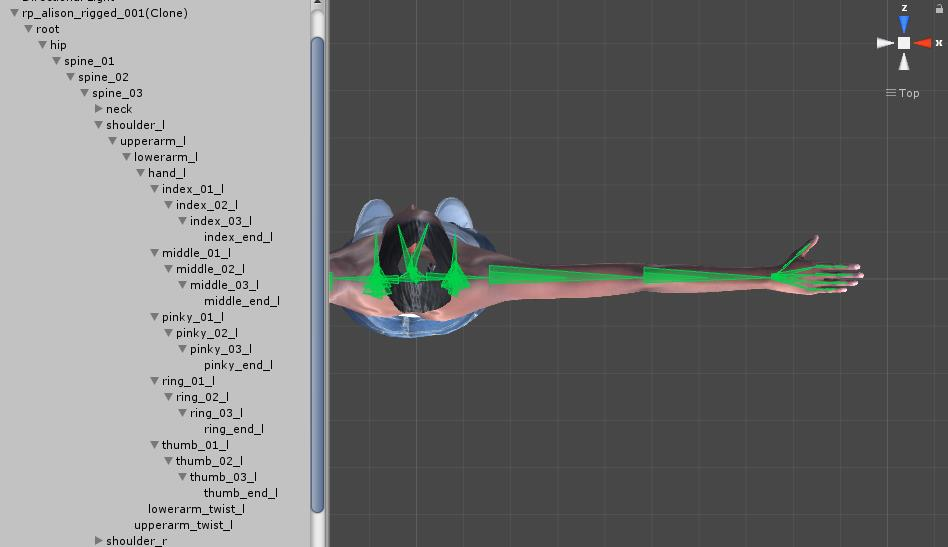
deform correctly. Rigging in avatar (Fig.) in Unity3D requires a rig that can deform the mesh to create an accurate representation. Inverse Kinematics can be computationally intensive so it is worth seeing how to address the issue; “Execution performance tables of the proposed algorithm show significant improvement on all tested platforms. Compared to OpenSim’s Inverse Kinematics tool, 50–15,000x speedup is achieved while maintaining numerical accuracy.” [196].
MINERVA (Final)
The final stable version used a desktop computer capable of rendering VR graphics. VR hardware used was a HTC Vive HMD, 2x hand held controllers, 2x Vive Pucks, 2x Base Stations. Headphones were also used for spatial audio. To demonstrate the technology, a simple game using gross motor movement to intercept a flying 3D object was used. The same level is repeated but the mirroring mode changes. MINERVA also had the option to display the input arm as resting or active.
Experimental development did continue but had too much emphasis on removing trackers and trying to make the LMC work when there were more important aspects of the system to be developed. The project also changed from PhD to MPhil which essentially terminated further development. The final version of MINERVA is not a polished product but should be viewed as an experimental prototype.
To recreate MINERVA, focus should be on the rigging of the avatar so the sagittal mirror plane’s origin is from the sternum. The two additional trackers allow the sternum position to be calculated. With the two additional trackers it enables 6DoF without disrupting the mirror origin. Once the mirroring origin has been established creating the traditional mode, the local X-axis is reflected (multiple by minus 1). The asymmetric was informally known as “offset” as it used the patient ’s shoulder width to determine the distance (on the X-axis).
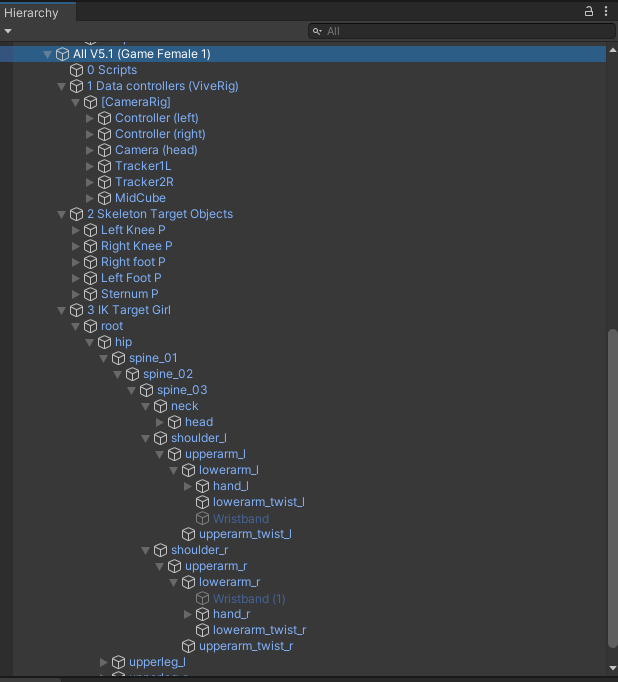
The structure of the rigging looked like this Fig.:
- Step 0, was a game object to contain the main script parameters:
- Which hand is the input (Left or right)
- Mirroring mode (Symmetrical or Asymmetrical)
- Visual rest hand (display by side or be mirrored) Step 1, was related to what VR hardware was being used and how to interact with it.
- Step 2, used the VR hardware as inputs for the mirroring Rig and outputted to appropriate mirrored position.
- Step 3, the mirrored game objects were used for the IK model.
Summary
The design and development of a 6 DoF VRMT were successfully achieved from a technological perspective. A 6 DoF system has many advantages in comparison to the way other “fixed” VRMT systems are developed, with the main advantage being removing distortion caused by the movement and rotation of the user. A new mirroring mode was developed (asymmetric) which cannot exist using a traditional mirror box. Design principles are more important as technology capabilities can change but ignoring the fundamentals will cause issues regardless of the hardware selected. The proposed measurement model is of interest for future experiments investigating performance and presence. So too is a design brief and protocol for future work conceptually, whereby a VRMT system might be built using the current generation of VR. Text is currently enlarged and exaggerated in the present implementation to make it easier to read without straining since minor features like the resolution of the screen used by the VR HMD make it difficult to create readable text. An illustration of how it affects the design is this expanded text. Future hardware is anticipated to have a higher resolution, eliminating this restriction. Focusing on the specifics of the technology being used now is less significant than understanding the underlying processes and ideas on why it was developed the way it was. Technology, specifically, will not be able to overcome poor design principles.
References (18)
- [35] J. Genius, S. Roß, S. Uhr, S. Braun, A. Rothgangel, and P. Verlag, “Practical protocol for stroke rehabilitation,” Pain Pract., vol. 16, no. 4, pp. 422–434, 2013, doi: 10.12855/ar.sb.mirrortherapy.e2013. ↩
- [37] A. Pincherle, M. Pace, S. Sarasso, L. Facchin, J. P. Dreier, and C. L. Bassetti, “Sleep, preconditioning and stroke,” Stroke, vol. 48, no. 12, pp. 3400–3407, 2017, doi: 10.1161/STROKEAHA.117.018796. ↩
- [38] H. A. . Pilcher JJ, “Effects of sleep deprivation on performance : a meta-analysis .,” Sleep, vol. 19, no. JUNE 1996, pp. 318–326, 2015. ↩
- [55] R. Schmidt, Motor Control and Learning 6th Edition with Web Resource: A Behavioral Emphasis, 6th ed. Human Kinetics Publishers, 2018. ↩
- [117] J. A. Stevens and J. P. Kincaid, “The Relationship between Presence and Performance in Virtual Simulation Training,” Open J. Model. Simul., vol. 03, no. 02, pp. 41–48, 2015, doi: 10.4236/ojmsi.2015.32005. ↩
- [127] “Steam Hardware & Software Survey: July 2020,” 2020. https://store.steampowered.com/hwsurvey/. ↩
- [181] J. McKinney, S. Mcdonough, P. J. Morrow, and N. C. Kennedy, “Reflections on the Design and Development of a Virtual Reality Mirror Therapy System for Upper Limb Stroke Rehabilitation,” ICDVRAT2018, 2018. ↩
- [186] S. Origua Rios, J. Marks, I. Estevan, and L. M. Barnett, “Health benefits of hard martial arts in adults: a systematic review,” J. Sports Sci., vol. 36, no. 14, pp. 1614–1622, 2018, doi: 10.1080/02640414.2017.1406297. ↩
- [187] U. Zarins and S. Kondrats, Anatomy for Sculptors. Exonicus LLC (1726), 2014. ↩
- [188] “VIVE | Controller,” 2020. https://www.vive.com/us/accessory/controller/. ↩
- [189] “Device Settings Leap Motion Controller.” https://manual.reallusion.com/Motion_LIVE_2D_Plugin/Resources/CTA_4/Plugins/Motion_Live_2D/Leap_Motio n_for_CTA.htm. ↩
- [190] R. Geometry and G. Analysis, Human Factors in Simulation and Training, Illustrate. CRC Press, 2008. ↩
- [191] M. Aurelius, Meditations. CreateSpace Independent Publishing Platform, 2018. ↩
- [192] A. Schlögl, M. Slater, and G. Pfurtscheller, “Presence research and EEG,” Proc. 5th Int. Work. Presence, p. 154ñ160, 2002, [Online]. Available: http://www-dept.cs.ucl.ac.uk/research/equator/papers/Documents2002/Mel_presence_2002.pdf. ↩
- [193] J. J. Pilcher and A. I. Huffcutt, “Effects of sleep deprivation on performance,” Sleep, vol. 19, no. 2, pp. 318–326, 1996, doi: 10.2466/pr0.1975.37.2.479. ↩
- [194] W. Kunde and M. Weigelt, “Goal congruency in bimanual object manipulation,” J. Exp. Psychol. Hum. Percept. Perform., vol. 31, no. 1, pp. 145–156, 2005, doi: 10.1037/0096-1523.31.1.145. ↩
- [195] T. W. Myers, Anatomy Trains: Myofascial Meridians for Manual and Movement Therapists, 3 edition. Churchill Livingstone, 2013. ↩
- [196] B. J. Borbély and P. Szolgay, “Real-time inverse kinematics for the upper limb: A model-based algorithm using segment orientations,” Biomed. Eng. Online, vol. 16, no. 1, pp. 1–29, 2017, doi: 10.1186/s12938-016-0291-x. ↩
Appendices (1)
Appendix H. Measurements ↩
Physical Upper Extremity Measurements
- ABILHAND, Action Research Arm Test (ARAT)
- Box and Block Test (BBT)
- Chedoke Arm and Hand Activity Inventory (CAHAI)
- Chedoke-McMaster Stroke Assessment, Disabilities of the Arm
- Shoulder and Hand (DASH)
- Frenchay Arm Test (FAT)
- Leeds Adult Spasticity Impact Scale (LASIS)
- Motor Evaluation Scale for Upper Extremity in Stroke Patients (MESUPES)
- Nine Hole Peg Test (NHPT)
- Purdue Pegboard Test (PPT)
- Stroke Arm Ladder, Stroke Impact Scale (SIS)
- Upper Extremity Function Test (UEFT)
- Wolf Motor Function Test (WMFT)
Stroke Severity Measurements
- Canadian Neurological Scale (CNS)
- Charlson Comorbidity Index (CCI)
- Modified Rankin Scale (MRS)
Activities of Daily Living Measurements
- ADL Profile, Assessment of Motor and Process Skills (AMPS)
- Barthel Index (BI)
- Frenchay Activities Index (FAI)
- Functional Independence Measure (FIM)
- Multiple Errands Test (MET)
- Reintegration to Normal Living Index (RNLI)
- Screening for Self-Medication Safety Post-Stroke Scale (S-5)
- Stroke Impact Scale (SIS)
Cognition Measurements
- Cambridge Cognition Examination (CAMCOG)
- Clock Drawing Test (CDT), Color Trails Test (CTT)
- Executive Function Performance Test, Kettle Test (KT)
- Mini-Mental State Examination (MMSE)
- Montreal Cognitive Assessment (MoCA)
- Multiple Errands Test (MET), Trail Making Test (TMT)
Mood/ Depression Measurements
- Aphasic Depression Rating Scale (ADRS)
- Beck Depression Inventory (BDI, BDI-II)
- General Health Questionnaire (GHQ- 28)
- Geriatric Depression Scale (GDS)
- Hospital Anxiety and Depression Scale (HADS)
- Montgomery Asberg Depression Rating Scale (MADRS)
- Patient Health Questionnaire (PHQ-9)
- Stroke Aphasic Depression Questionnaire (SADQ)
Quality of Life Measurements
- Medical Outcomes Study Short Form 36 (SF-36)
- Stroke Specific Quality of Life Scale (SS-QOL)
- Stroke-Adapted Sickness Impact Profile (SA-SIP30)
System Measurements
- Immersive Tendencies Questionnaire (ITQ)
- Presence Questionnaire (PQ), Simulator Sickness Questionnaire (SSQ)
- User Experience Questionnaire (UEQ)