Composite Score Design Tool
During game design and analysis, I often work with large collections of documents and datasets that require repeated evaluation, comparison, and ranking. Many of these processes involved manually calculating metrics, filtering information, and creating different views of the same data. To streamline this workflow, I built a lightweight and flexible application for generating composite scores from structured data. The tool imports generic spreadsheets, applies configurable scoring methods, generates statistical summaries, and provides multiple ways to explore relationships within the dataset. The goal was to create a reusable analysis tool that improves clarity when comparing complex groups of data.
Key Features
- Imports generic spreadsheet datasets
- Applies filtering and configurable scoring weights
- Generates descriptive statistics including:
- Minimum and maximum values
- Z-scores
- Composite scores
- Exports processed results into separate sheets
- Provides element-level and grouped data views
- Enables comparison between individual entries and larger datasets
Data Import
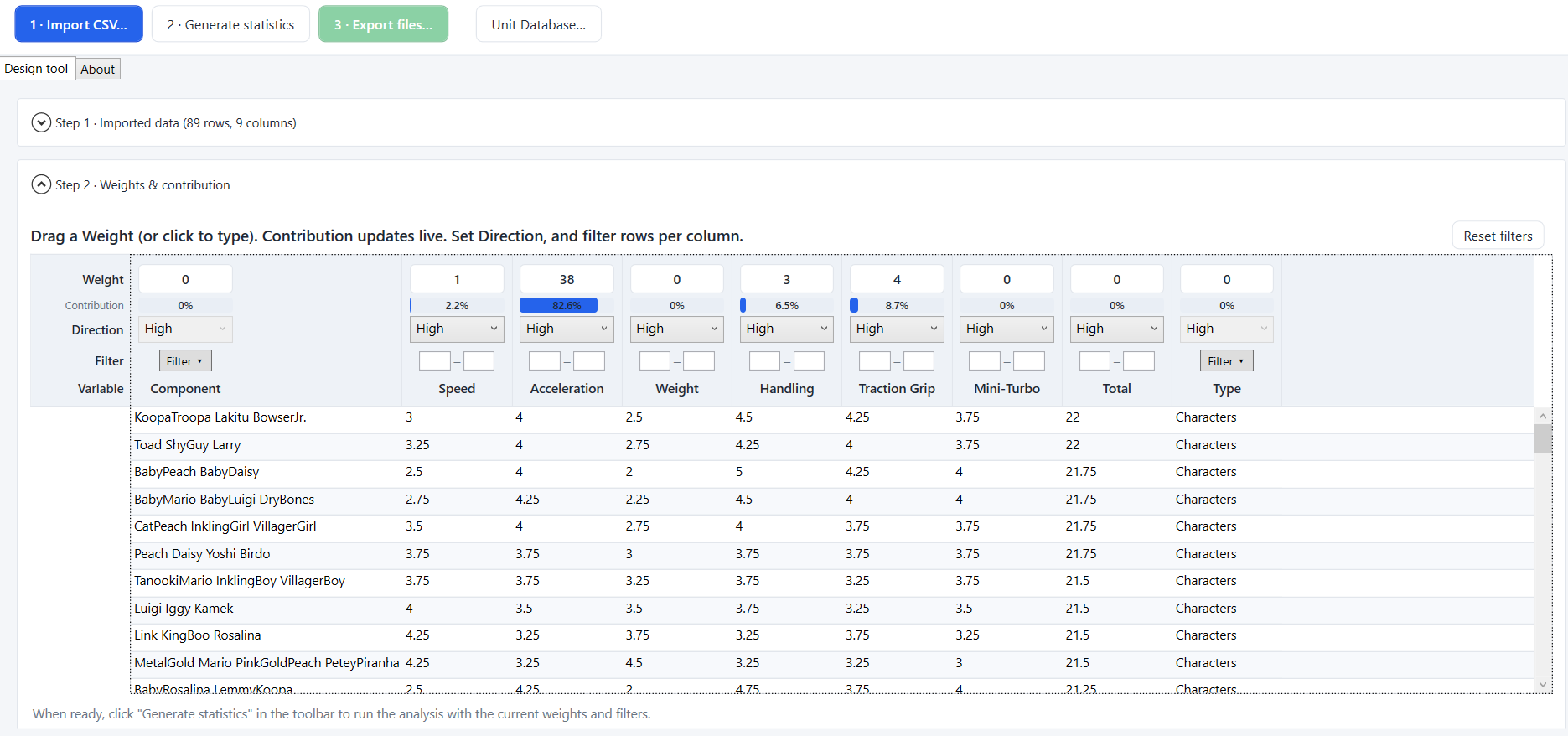
The workflow begins by importing structured data (Fig.). The application then processes the dataset by applying filters and user-defined weights before generating composite scores.
Composite Scoring
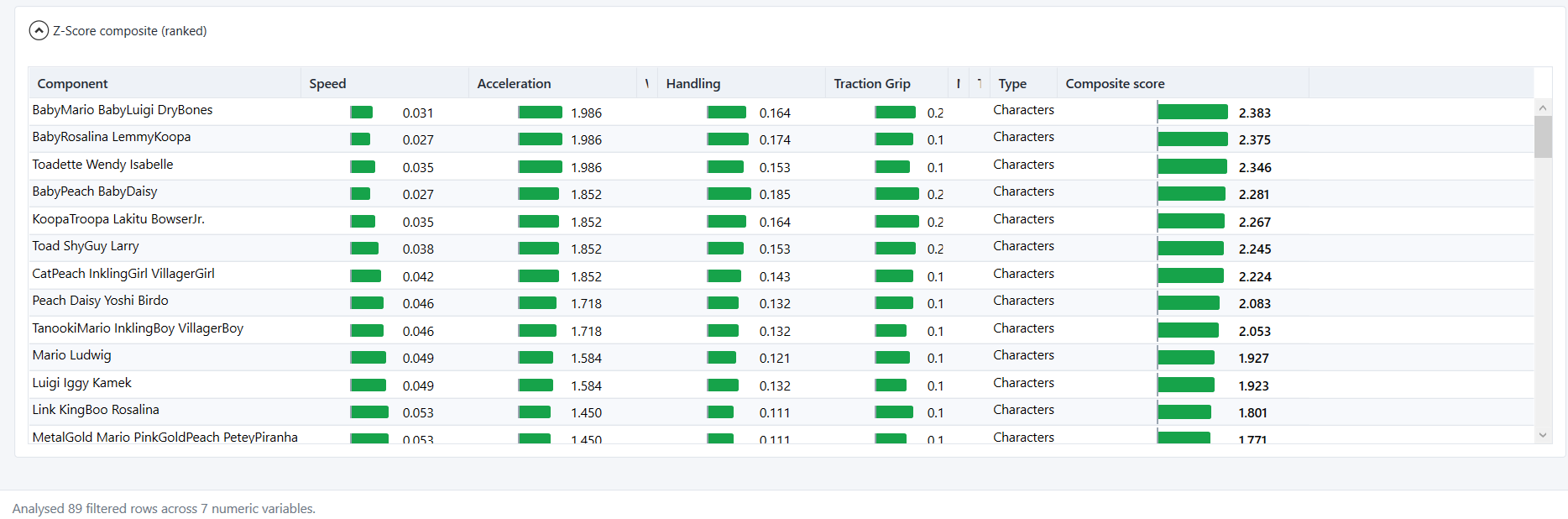
The scoring system combines multiple weighted metrics into a single composite score (Fig.). Transforms multiple measurements into one score.
Data Exploration and Group Comparison
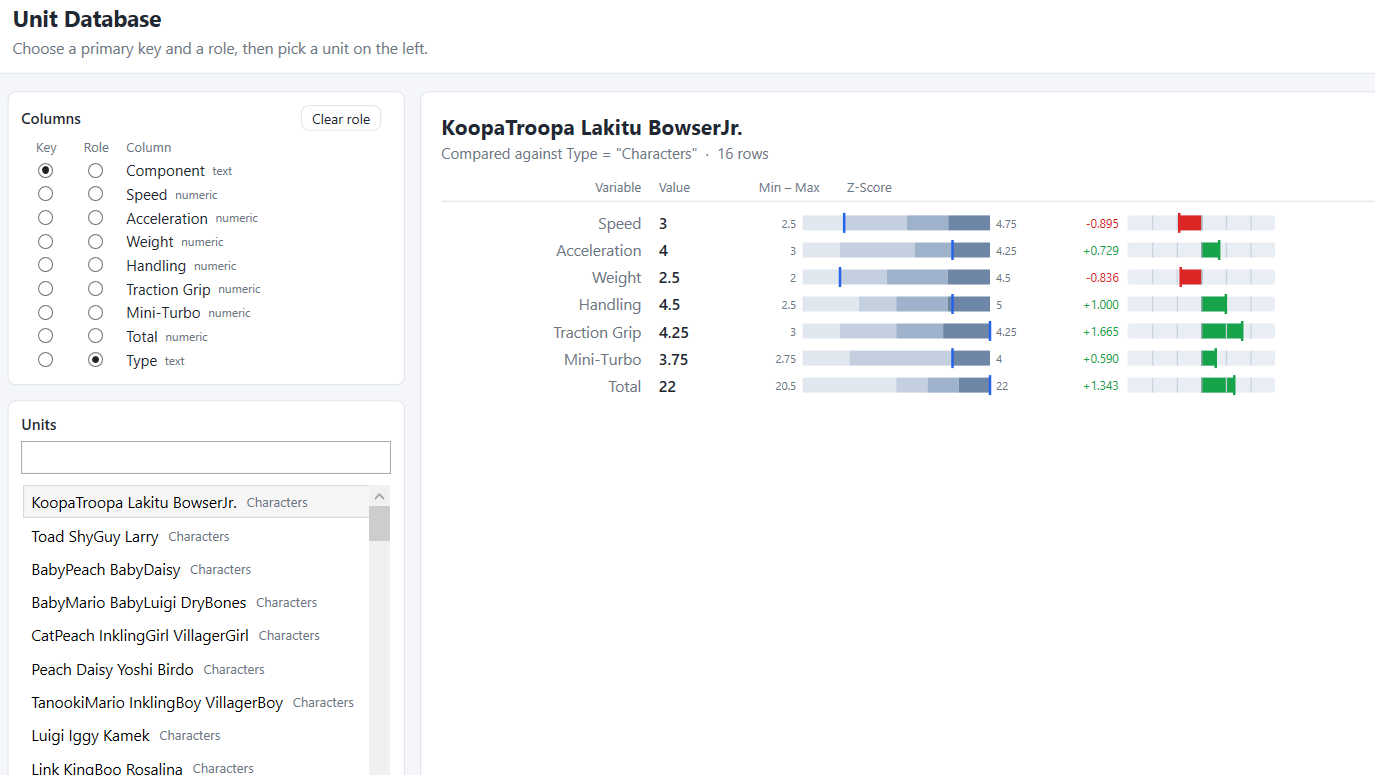
The database view allows individual elements to be inspected (Fig.) while comparing them against their broader groups. This provides additional context beyond simple rankings by showing how each element performs relative to similar entries.
Technical Goals
- Build a flexible system that works with different datasets rather than a fixed schema
- Automate repetitive analysis workflows
- Provide transparent scoring calculations
- Create multiple perspectives of the same dataset to improve decision-making