Introduction
Brain damage via stroke causes significant disability affecting one’s quality of life. Multiple elements contribute to successful rehabilitation. A variety of approaches are used to rehabilitate the patient, with each intervention having its advantages and disadvantages. The main problem with rehabilitation is that patients do not adhere to the prescribed exercises. The idea is to construct a system to frame the prescribed exercises in a fun format to improve adherence. Overall, the system would act like a good coach, assisting the patient to reach the goal and optimise their potential.
Stroke
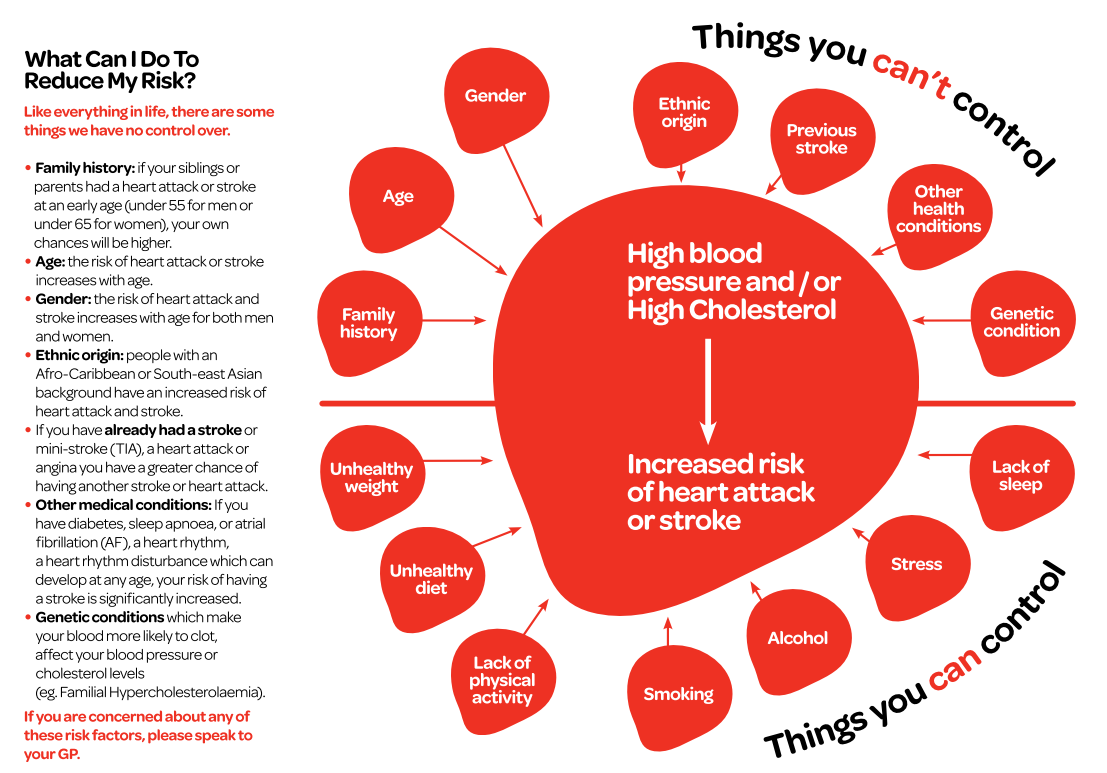
Medical care for stroke has undergone a dramatic change in the last two decades. Stroke was once considered an untreatable condition by many health professionals [1]. Disrupted blood flow to the brain in the form of a clot causes ischaemic stroke whilst a bleed can cause a haemorrhagic stroke with ischaemic stroke the more common of the two. Individual comorbidity factors can contribute to the risk of a stroke occurring [2] (Appendix A). World Stroke Organization (WSO) state stroke is the second-leading cause of mortality worldwide and the third-leading cause of death and disability combined and over US$721 billion, or 0.66 percent of the world’s GDP, is the projected total cost of stroke worldwide [3].
Mirror Therapy (MT) is a physiotherapy intervention that uses the mirror box, and the mirror box was called the ‘Virtual reality box” was designed in the ’90s by Ramachandran, originally for phantom limb pain [4]. Stroke rehabilitation has used MT as it has the advantage that it can work for impaired limbs with little or no movement. Dohle et al. [5] suggest that MT is more effective for stroke patients presenting nerve damage induced muscular weakness in the upper limb and it also offers a chance to assist those neglected by alternative rehabilitation interventions.
The definition of “Learned non-use” is “Observed reduction of a behaviour that cannot be exclusively attributed to an impairment in the central nervous system”[6]. Learned non-use is when the person suppresses movement due to adverse effects. Learned non-use is significant when weakness or paresis happens early on. Sensory impairment, immobility and chronic pain can also contribute [7]. Stroke can impart different effects, physical change may be visible, but emotional change is not so readily identifiable [8]. Physical impairments can include: Dysesthesia, Headaches, Hemiparesis, Hemiplegia, Hypoaesthesia, Muscle Stiffness, Muscle Tightness, Nerve Damage, Pain, Paresthesia, Spasticity, and Weak Muscles [9]. Emotional impairments can include: Anger, Anxiety, Depression, Emotionalism, Frustration, and Suicide, [8][10]. Pre-stroke depression was associated with significantly shorter survival after stroke [11]. Stroke survivors (45%) feel abandoned when they leave the hospital because they do not receive the care and support that they need [12].
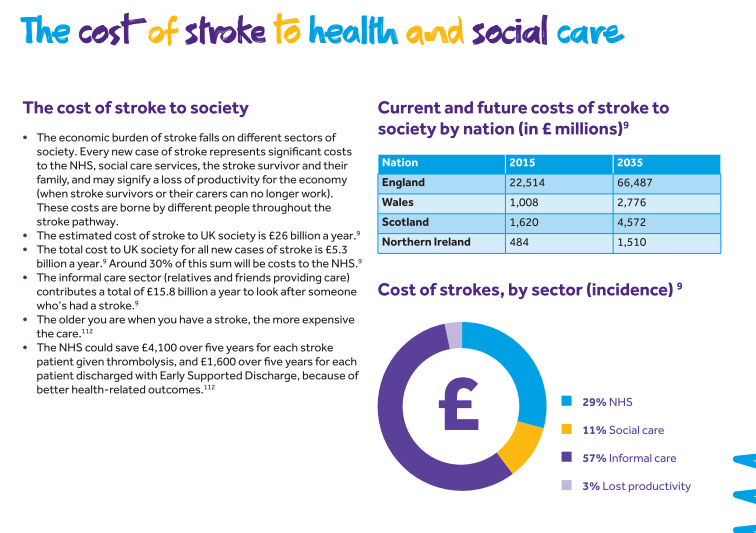
In England, the annual expense of stroke care for the NHS has reached £1.7 billion [13]. The cost of stroke to health and social care is projected in the year 2035 to cost (in £ million) England: 66,487, Wales: 2,776, Scotland: 4,572, Northern Ireland: 1,510 [13] (Appendix B). Key statistics reveal more than 75% of poststroke individuals report arm weakness, with fatigue also being common [14]. The majority of people who have a stroke experience sensory loss in their affected arm, risking injury and impacting functional use of the arm and the survivors’ level of independence during activities associated with daily living [15]. Brain damage has its inherent problems, as both nervous transmission and cognitive function can be affected, which compounds the difficulties of aiming to restore motor function. For non-disabled people, fine motor skill manipulation such as pinching or plucking motions or gross motor movements like arm raising are made instinctively and effortlessly. This is not so for stroke-impaired individuals for whom these simple movements might seem unachievable [16].
Healthy lifestyle for optimised rehabilitation
Lifestyle affects performance and if the patient can improve their lifestyle, this could lead to positive outcomes. It is worth noting what elements impact performance and what can be changed. NICHS [2] states risk factors into 2 categories, controllable and uncontrollable factors. NICHS Risk Factors[2]:
Controllable
- Unhealthy weight
- Unhealthy diet
- Lack of physical activity
- Smoking
- Alcohol
- Stress
- Lack of Sleep
Uncontrollable
- Family history
- Age
- Gender
- Ethnic origin
- Previous stroke
- Other health conditions
- Genetic condition
Diet
It is possible to use diet as tool to assist in recovery and rehabilitation [17]. The NICHS [2] already issue their recommendations when it comes to diet, which is about balance, so the body gets the required nutrients while maintaining a healthy weight, blood pressure and cholesterol level [2].
Mayer [18] discusses the connection between mind and gut and how diet can impact emotion. This is worth considering since many of the emotional issues, such as depression and anxiety, can be resolved through a better nutritional diet, and as both these issues can elevate blood pressure, it may also induce apathy and fatigue or result in polypharmacy. For example, where antiplatelets are taken alongside nonsteroidal antiinflammatory medication, increases bleeding risk; therefore, it is essential to pay attention to possible multimorbidities, especially when the health of stroke suffers can be reduced by physical, cognitive, and psychological dysfunction.
Fasting is not a diet; it is simply the voluntary absence of food for some time. Fung [19] has treated many patients for type 2 diabetes and states the advantages of fasting are that it improves: mental clarity, concentration, weight loss, body fat loss, blood sugar levels, insulin sensitivity, energy, fat burning and blood cholesterol, prevents Alzheimer’s disease, extends life, reverses the ageing process, and decreases inflammation [19]. Lowering blood cholesterol can help prevent heart attacks and strokes. Statins are a class of drugs that also do this, but with many potential undesirable side effects [20].
Exercise
For those compromised by the effects of stroke, exercise could enhance mood and attention [21]. There is a list of 40 conditions that worsen through a lack of physical activity with growth, maturation and ageing throughout the person’s life [22]. Of these negative conditions, a lack of physical activity can affect accelerated biological ageing/premature death, balance, depression and anxiety, hypertension, immunity, obesity, pain, stroke, and tendons being less stiff.
A group of physiotherapists from Sydney, Australia, have a website [23] dedicated to prescribing exercises appropriate for people with injuries and disabilities with 253 exercises for stroke (Shoulder/upper arm, Elbow/forearm, Wrist/hand).
Santisteban et. al repot 48 outcome measurements[24] for upper limb in the systemic review. The three most popular reported was; Fugl-Meyer Test (FMT, Wolf Motor Function Test (WMFT) and Ashworth Scale. A likely reason for the large diversity is differing priorities influenced by several factors[24]. High-intensity interval training is effective in restoring strength in older adults, and as it is an intense exercise and stroke is concerned with blood pressure, the physio would know what exercises to prescribe that are appropriate [25]. There are many ways to do strength training, and isometrics are of interest as they do not require equipment. Isometrics are “exercise or a system of exercises in which opposing muscles are so contracted that there is little shortening but a great increase in tone of muscle fibers involved”[26].
This type of exercise could be done in VR. Devices like the Valve Index controllers have the potential to measure the effort of the patient [27]. As more dose is consider better [28] take must be taken that the patient does not over-train. The therapist should look out for any potentially harmful behaviour in their endeavours where the patient over-exerts themselves by blocking out pain [29]. One needs to be aware that overtraining can have a negative impact [30]. Kreher and Schwartz (Table ) , describe what the signs of over-exercising may include.
| Signs of over-exercising include: |
|---|
| Inability to sleep at night following a vigorous workout |
| Sleeping too much, compared to your norm, and still feeling exhausted |
| Waking up heart racing the day after an intense workout |
| Feeling exhausted for the rest of the day following a workout |
| Feeling irritable and moody after an increase in the intensity of your exercise |
| Frequently getting ill (for example, coughs and colds) |
| Impaired heart-rate variability |
Relaxation
A study by Wathugala et al. using “Mindfulness” which involved meditation and breathing “may lead to decreased spasticity and increased quality of life factors in individuals after stroke” [32]. There are ways to relieve stress, with Chatterjee [31] suggesting two minutes of deep breathing/laughing uncontrollably for a few minutes, or practising yoga. Environment plays a role in relaxation and urban environments are perceived worse than natural environments. Environments with water are evaluated highly in studies by White et al. [33] and Nichols [34], thus using a scenario or environment that uses water may be of interest. Breathing is an aspect often overlooked which can relax the patient. Since the MT protocol [35] suggests getting familiar and for the illusion to be most effective, you must first feel at ease with the location where you will perform the exercise. Breathing exercises can maximise time usage and lower the patient’s stress level before performing exercises. Benefits of nasal breathing include enhanced mood and mental state, better-quality sleep, increased blood oxygenation, improved oxygen delivery to cells, and less stress. [31]. Meditation is another relaxation method. Potential benefits of meditation [31] include lower blood pressure, reduced stress levels, less anxiety, improved mental health, better focus on concentration, more efficient immune-system function, higher energy levels, and less tendency to dwell on negative things.
Sleep
Sleep is a critical element to the outcomes of stroke rehabilitation. Sleep is when the body repairs itself and inadequate quality sleep can cause issues, hence sleep quality is a significant factor for recovery [36] [37]. Mood and performance can be strongly affected particularly by partial sleep deprivation. Those recovering from stroke may experience poor quality sleep which in turn may affect their attitude to a rehabilitation session [38]. Sensorimotor skills require post-training sleep for the optimal consolidation of learning [39].
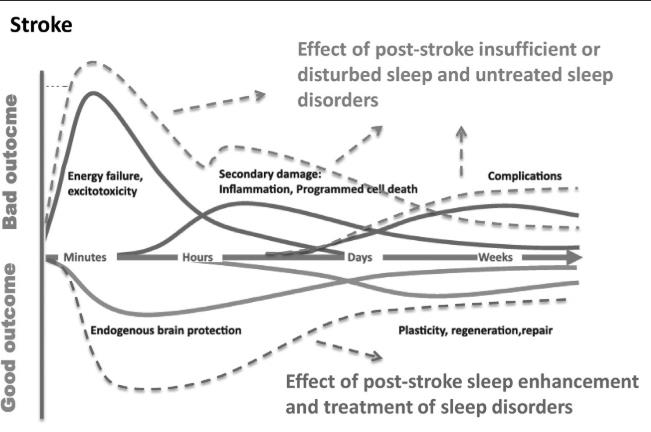
When measuring performance, if the system can address sleep problems, it could improve session outcomes and patients will be in a healthy cycle [37]. Sleep disorders impact the influence of stroke outcomes Fig. [37].
If the patient has insufficient sleep this starts a series of problems such as energy failure and leads to complications as time elapses, while if they have sufficient sleep it can regenerate and repair. Therefore, the system should encourage lifestyle changes to optimise the rehabilitation effort as a whole.
Stress
Stress can manifest itself both physically and mentally in the body, causing problems that will increase negative consequences such as stroke [40],[31]. It is important to note the perception of stress the patient is feeling. How we perceive stress affects both physical and mental health [41]. The brain is malleable, so the more frequently it feels stressed, the more influential the emotional brain will become. The more Micro Stress Doses (MSDs) taken on, the more the rational brain will be deskilled, while the emotional brain grows stronger. Depression, feeling down, and lacking self-confidence, motivation, and energy are issues that are relevant in trying to solve the adherence issue for rehabilitation [31]. Often, emotional support is overlooked, or unrecorded [8] which are factors to note for performance. However not all stress is bad, and Chatterjee [31] distinguishes the healthy short-term response and the long-term harmful effects of stress (Table).
| Healthy short-term response | Long-Term harmful effect |
|---|---|
| Raised blood pressure in the short term helps transport more blood to the brain | Chronic high blood pressure increases the risk of many diseases, such as heart disease and stroke. |
| Increased blood clotting will help save your life if you have a bleeding wound, as the bleeding will stop more quickly. | Long-term tendency for the blood to clot will increase the risk of having a stroke, heart attack or DVT (deep vein thrombosis) |
| Increased insulin resistance in the short term means that your body won’t store any sugar in your liver and muscle cells. It will result in more sugar stating in your bloodstream, which means that more will be available for the brain. |
Long-term insulin resistance contributes to the development of type 2 diabetes obesity, high blood pressure and the production of harmful types of cholesterol, like VLDL. |
| The body’s resources are directed away from digestion, as non- essential function for survival at that moment. | Long-term diversion of resources to make cortisol will lead to hormonal issues such as lack of libido and menopausal symptoms. |
| Small amounts of cortisol improve out brain function, which allows it to function better in a short, stressful situation, e.g., being attacked by an animal or even to perform an exam. |
If attention is diverted away from digestion for too long, digestive complaints will result, such as constipation, bloating, indigestion and IBS. |
| The emotional brain being on high alert to look out for threats is a very good thing if you are in danger. | Prolonged release of cortisol starts to kill nerve cells in the hippocampus (the brains’ memory centre) any may increase the likelihood of developing Alzheimer’s. |
| Short-term inflammation is the result of your immune system firing up to help you deal with the threat and prepares you to recover quickly in case you have a wound that becomes infected. |
Inflammation that becomes chronic and unresolved increases your risk of most modern chronic diseases, including type 2 diabetes, heart disease, obesity, and many cases of depression. |
To help overcome stress, Chatterjee promotes undertaking [31] an activity that brings joy, something that trains your ability to delay gratification, something that involves movement of the exercise. MINERVA as technology should exploit the fun elements in rehabilitation, to assist in adherence. A 6DoF system has 3 positional degrees of freedom (forward/back, up/down, left/right) and 3 rotational degrees of freedom (pitch, yaw, roll) this means it allows for movement, unlike a seated or 3DoF system. Forest bathing [31] is exposure to natural green environments and has been suggested as a way to de-stress; the benefits of forest bathing include reduced blood pressure, lower stress levels, low levels of hormones such as adrenaline and cortisol, lower blood sugar levels, improved symptoms of depression, improved sleep quality, improved memory and concentration, enhanced immune system function. A Virtual Environment with natural elements could elicit a similar response that is worth noting for design. This could be attempted by creating a virtual environment with assets that represent the flora and fauna of a forest. By knowing what factors affect stroke, and what to do to address them, it is worth considering the possibility of their implementation into the system design as it has the potential to improve the outcome. Essentially, that is the whole point of the system, to have a positive impact on the patient by addressing the related factors (a Healthy lifestyle for optimised rehabilitation). Since the intended audience is stroke patients suffering from a disabled limb, the MT Protocol has been chosen and exercises will be based on this. VR technology is used to enhance and go beyond the physical limitations of traditional MT. Design considerations include lowering inhibitors to increase patient engagement, acceptable cost, and quality by historically accepted norms, and more so that the system could be scaled easily to reach those who require it.
Research Aim
The research aim is to develop a methodological and technological framework that builds upon VR and MT to support UL rehab. Design constraints and considerations will be discussed later as it is not feasible to implement the ‘ultimate’ system within the scope of this project.
Outcomes
- Design and development of an original VRMT system
- Design and implement an original mirroring mode (asymmetric)
References (41)
- [1] Stroke Association, “Saving lives: 20 years of investing in vital stroke research, Stroke Assoc., vol. Northampton, 2012, doi: 10.1037/a0016668. ↩
- [2] NICHS, “Choose Healthy Stuff,” 2016. https://nichs.org.uk/wp-content/uploads/2016/02/NICHS_Choose-HealthyStuff_2016_for-web-2.pdf. ↩
- [3] V. L. Feigin et al., “World Stroke Organization (WSO): Global Stroke Fact Sheet 2022,” Int. J. Stroke, vol. 17, no. 1, pp. 18–29, 2022, doi: 10.1177/17474930211065917. ↩
- [4] V. S. Ramachandran and D. Rogers-Ramachandran, “Synaesthesia in Phantom Limbs Induced with Mirrors,” Proc. R. Soc. B Biol. Sci., vol. 263, no. 1369, pp. 377–386, 1996, doi: 10.1098/rspb.1996.0058. ↩
- [5] 5. C. Dohle, J. Püllen, A. Nakaten, J. Küst, C. Rietz, and H. Karbe, “Mirror Therapy Promotes Recovery From Severe Hemiparesis: A Randomized Controlled Trial,” Neurorehabil. Neural Repair, vol. 23, no. Cd, pp. 209–217, 2009, doi: 10.1177/1545968308324786. ↩
- [6] L. Non-use, “Encyclopedia of Clinical Neuropsychology,” Encycl. Clin. Neuropsychol., pp. 2–4, 2018, doi: 10.1007/978-3319-56782-2. ↩
- [7] P. Raghavan, “Upper Limb Motor Impairment Post Stroke,” Phys. Med. Rehabil. Clin. N. Am., vol. 26, no. 4, pp. 599–610, 2015, doi: 10.1016/j.pmr.2015.06.008.Upper. ↩
- [8] S. Helpline, “Emotional changes after stroke,” Stroke Assoc., pp. 1–12, http://www.stroke.org.uk/sites/default/files/Emotional changes after stroke.pdf. ↩
- [9] S. Helpline, “Physical effects of stroke,” Stroke Assoc., pp. 1–6, 2013. ↩
- [10] E. Forsström, H. Hakko, T. Nordström, P. Räsänen, and A. Mainio, “Suicide in Patients With Stroke: A Population-Based Study of Suicide Victims During the Years 1988-2007 in Northern Finland,” J. Neuropsychiatry Clin. Neurosci., vol. 22, no. 2, pp. 182–187, 2010, doi: 10.1176/appi.neuropsych.22.2.182. ↩
- [11] Y. Kishi, R. G. Robinson, and J. T. Kosier, “Suicidal plans in patients with stroke: Comparison between acute-onset and delayed-onset suicidal plans,” Int. Psychogeriatrics, vol. 8, no. 4, pp. 623–634, 1996, doi: 10.1017/S1041610296002931. ↩
- [12] K. Charles, “Meeting the Emotional Wellbeing Needs of Stroke Survivors & Carers - Liverpool Service Model.” ↩
- [13] E. J. Hughes, “State of the Nation III,” Int. Aff., vol. 56, no. 1, pp. 198–199, 2018, doi: 10.2307/2615809. ↩
- [14] Stroke Association, “State of the Nation Stroke statistics,” Stroke Assoc. Resour. Sheet, no. January, pp. 1–37, 2017, doi: 10.2307/j.ctt80ggr. ↩
- [15] S. Doyle, K. McKenna, S. Bennette, and S. Fasoli, “Interventions for sensory impairment in the upper limb after stroke (Review),” no. 6, 2010, doi: 10.1002/14651858.CD006331.pub2. ↩
- [16] S. Helpline, “Physiotherapy after stroke,” stroke Assoc., vol. 16, no. 1, pp. 1–8, 2017. ↩
- [17] A. C. Lieber, E. Hong, D. Putrino, D. A. Nistal, J. S. Pan, and C. P. Kellner, “Nutrition, energy expenditure, dysphagia, and self-efficacy in stroke rehabilitation: A review of the literature,” Brain Sci., vol. 8, no. 12, 2018, doi: 10.3390/brainsci8120218. ↩
- [18] E. Mayer, The Mind-Gut connection, 1st ed. Harper Wave, 2016. ↩
- [19] J. Fung and J. Moore, The Complete Guide to Fasting, 1st ed. Victory Belt, 2016. ↩
- [20] et al Rees, “Dietary advice for reducing cardiovascular risk, The Cochrane Collaboration.,” no. 12, 2013, doi: 10.1002/14651858.CD002128.pub5.www.cochranelibrary.com. ↩
- [21] J. C. Basso and W. A. Suzuki, “The Effects of Acute Exercise on Mood, Cognition, Neurophysiology, and Neurochemical Pathways: A Review,” Brain Plast., vol. 2, no. 2, pp. 127–152, 2017, doi: 10.3233/BPL-160040. ↩
- [22] B. M. Hegde, “Health benefits of exercise,” Kuwait Med. J., vol. 50, no. 2, pp. 143–145, 2018, doi: 10.5152/tftrd.2014.33716. ↩
- [23] “physiotherapyexercises.” https://www.physiotherapyexercises.com/home/search. ↩
- [24] L. Santisteban, M. Térémetz, J. P. Bleton, J. C. Baron, M. A. Maier, and P. G. Lindberg, “Upper limb outcome measures used in stroke rehabilitation studies: A systematic literature review,” PLoS One, vol. 11, no. 5, pp. 1–16, 2016, doi: 10.1371/journal.pone.0154792. ↩
- [25] A. Constans and J. Little, Body by Science: A Research Based Program for Strength Training, Body building, and Complete Fitness in 12 Minutes a Week: A Research Based Program to Get the Results You Want in 12 Minutes a Week, vol. 17, no. 19. McGraw-Hill 2012, [Online]. Available: Education, 2009. ↩
- [26] “isometrics.” https://www.merriam-webster.com/dictionary/isometrics. ↩
- [27] “Controllers - Valve Index.” https://www.valvesoftware.com/en/index/controllers. ↩
- [28] N. S. Ward, F. Brander, and K. Kelly, “Intensive upper limb neurorehabilitation in chronic stroke: Outcomes from the Queen Square programme,” J. Neurol. Neurosurg. Psychiatry, vol. 90, no. 5, pp. 498–506, 2019, doi: 10.1136/jnnp-2018319954. ↩
- [29] P. J. Clough, “RELATIONSHIP BETWEEN MENTAL TOUGHNESS AND PHYSICAL ENDURANCE,” no. 1, pp. 192–194, 2005. ↩
- [30] J. B. Kreher and J. B. Schwartz, “Overtraining Syndrome: A Practical Guide,” Sports Health, vol. 4, no. 2, pp. 128–138, 2012, doi: 10.1177/1941738111434406. ↩
- [31] R. Chaterjee, The Stress Solution: 4 steps to a calmer, happier, healthier you. 2018. ↩
- [32] M. Wathugala, D. Saldana, J. M. Juliano, J. Chan, and S. L. Liew, “Mindfulness Meditation Effects on Poststroke Spasticity: A Feasibility Study,” J. Evidence-Based Integr. Med., vol. 24, pp. 1–7, 2019, doi: 10.1177/2515690X19855941. ↩
- [33] M. White, A. Smith, K. Humphryes, S. Pahl, D. Snelling, and M. Depledge, “Blue space: The importance of water for preference, affect, and restorativeness ratings of natural and built scenes,” J. Environ. Psychol., vol. 30, no. 4, pp. 482–493, 2010, doi: 10.1016/j.jenvp.2010.04.004. ↩
- [34] W. J. Nichols, Blue Mind: The Surprising Science That Shows How Being Near, In, On, or Under Water Can Make You Happier, Healthier, More Connected, and Better at What You Do, Reprint. Back Bay Books, 2015. ↩
- [35] J. Genius, S. Roß, S. Uhr, S. Braun, A. Rothgangel, and P. Verlag, “Practical protocol for stroke rehabilitation,” Pain Pract., vol. 16, no. 4, pp. 422–434, 2013, doi: 10.12855/ar.sb.mirrortherapy.e2013. ↩
- [36] M. Walker, Why We Sleep: The New Science of Sleep and Dreams, Reprint ed. Penguin;, 2018. ↩
- [37] A. Pincherle, M. Pace, S. Sarasso, L. Facchin, J. P. Dreier, and C. L. Bassetti, “Sleep, preconditioning and stroke,” Stroke, vol. 48, no. 12, pp. 3400–3407, 2017, doi: 10.1161/STROKEAHA.117.018796. ↩
- [38] H. A. . Pilcher JJ, “Effects of sleep deprivation on performance : a meta-analysis .,” Sleep, vol. 19, no. JUNE 1996, pp. 318–326, 2015. ↩
- [39] M. P. Walker, T. Brakefield, A. Morgan, J. A. Hobson, and R. Stickgold, “Practice with sleep makes perfect: Sleepdependent motor skill learning,” Neuron, vol. 35, no. 1, pp. 205–211, 2002, doi: 10.1016/S0896-6273(02)00746-8. ↩
- [40] R. Chaterjee, The 4 Pillar Plan: How to Relax, Eat, Move and Sleep Your Way to a Longer, Healthier Life. Penguin Life, 2017. ↩
- [41] A. Keller et al., “Does the Perception that Stress Affects Health Matter?,” Heal. Psychol., vol. 31, no. 5, pp. 677–684, 2013, doi: 10.1037/a0026743.Does. ↩
Appendices (2)
Appendix A. Stroke Factors ↩
Appendix B. The cost of stroke to health and social care ↩